Why FlipEx documented this scam from the inside
FlipEx rejects fake Walmart gift cards every week. We wrote a guide to help users spot them. But spotting the card is only half the story. Many users who contact FlipEx support have already lost money not on the card itself (the card was always worthless), but on a “processing fee” or “PIN renewal fee” paid to the scammer to supposedly get the funds from the card.
To understand the full scheme, a member of the FlipEx team contacted one of the Telegram channels printed on a fake Walmart card and played along as a potential victim. What follows is a step-by-step breakdown of what happened, based on real screenshots from that conversation. The channel name and account details are documented exactly as they appeared.
Phase 1: The setup
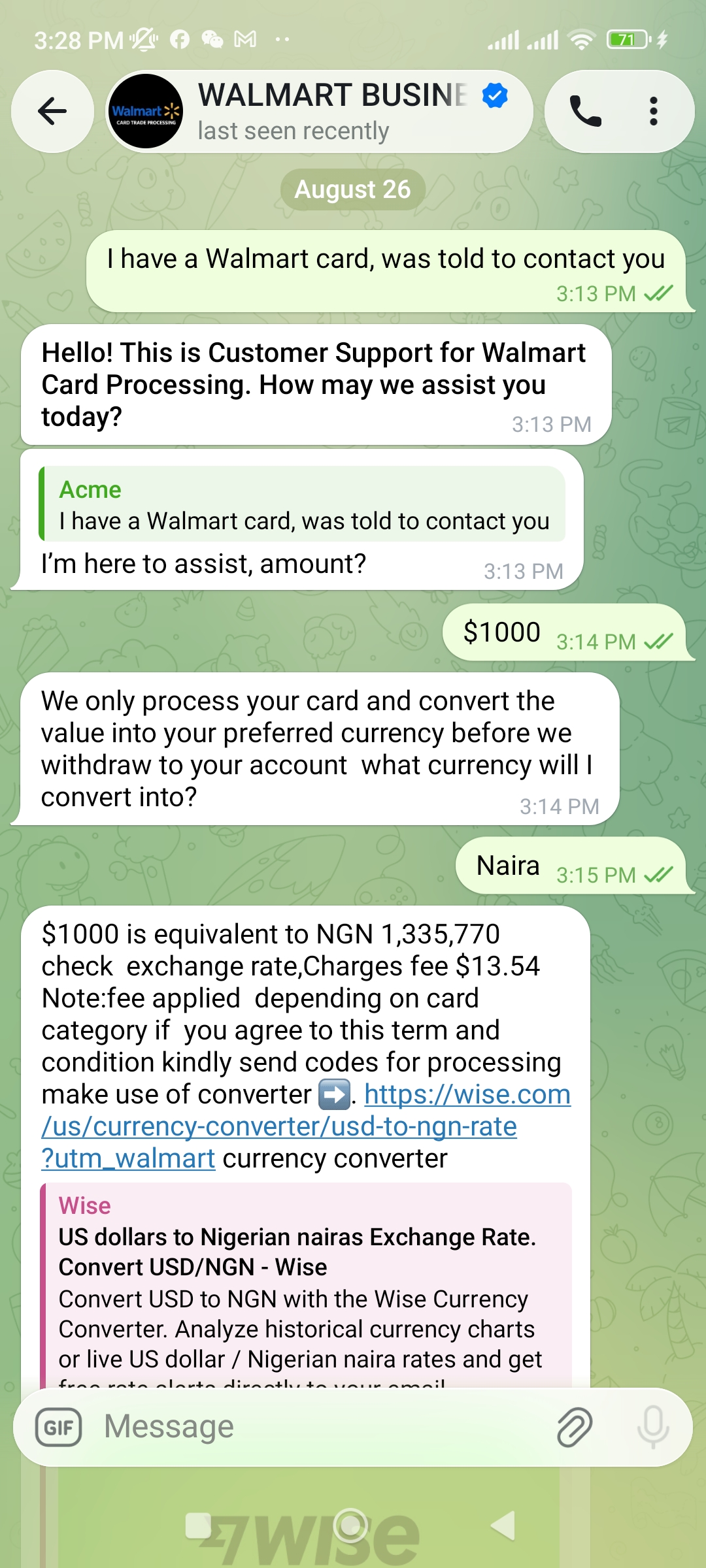
The Telegram channel we hit up was titled “WALMART BUSINESS” and carries a blue verified checkmark but that is not a mark of legitimacy for the channel because Telegram allows any channel to purchase a blue tick. The profile picture uses the Walmart logo with “CARD TRADE PROCESSING” written underneath it. It looks official at first glance but all of the Walmart branding is smokescreen.
FlipEx: “I have a Walmart card, was told to contact you.”
The channel responds instantly: “Hello! This is Customer Support for Walmart Card Processing. How may we assist you today?”
The framing is deliberate. “Customer Support” and “Card Processing” are corporate-sounding phrases designed to make the user feel they are dealing with a legitimate Walmart service. They are not. Walmart does not operate gift card processing through Telegram. Walmart’s actual customer service number is 1-888-537-5503, and its help portal is walmart.com/help.
FlipEx: “$1000.”
Channel: “We only process your card and convert the value into your preferred currency before we withdraw to your account. What currency will I convert into?”
FlipEx: “Naira.”
This is phase 1 complete. The scammer now knows that we have a fake card valued as a “$1,000 Walmart card” (which is itself a fake card the scammer’s network likely distributed) and wants Naira. The hook is set.
Phase 2: The fake rate quote
The channel then sends a rate calculation:
“$1000 is equivalent to NGN 1,335,770. Check exchange rate. Charges fee $13.54. Note: fee applied depending on card category. If you agree to this term and condition, kindly send codes for processing.”
Below this text, the channel shares a link to Wise.com’s legitimate USD-to-NGN currency converter. The URL includes a fake UTM parameter: ?utm_walmart.
For the unsuspecting eye, this should lend more credibilty to the conversation, but the reality is that it is all part of the social engineering hack. They show you what is true and verifiable so that when they slip in the deception, you would be caught off guard. By linking to a real, trusted financial tool (Wise), the scammer borrows its credibility. The victim sees a legitimate Wise rate page and assumes the quoted NGN 1,335,770 figure is real.
The quoted rate is intentionally generous. At real market rates, a $1,000 Walmart gift card would not convert to ₦1.3 million on any legitimate platform. The inflated number keeps the victim engaged.
The channel then requests for the Walmart card image - we shared the same “Order confirmation #777019” template documented in our fake Walmart card guide. Code: D1AU67WF48X39KM9. Alphanumeric (not the 16-digit numeric format real Walmart cards use).
Channel: “If you agree with the conditions, send card and receipt code to process.”
But they didn't share any terms and conditions at any point before requesting to see the card.
FlipEx sends a receipt code: “1A5TWZ.”
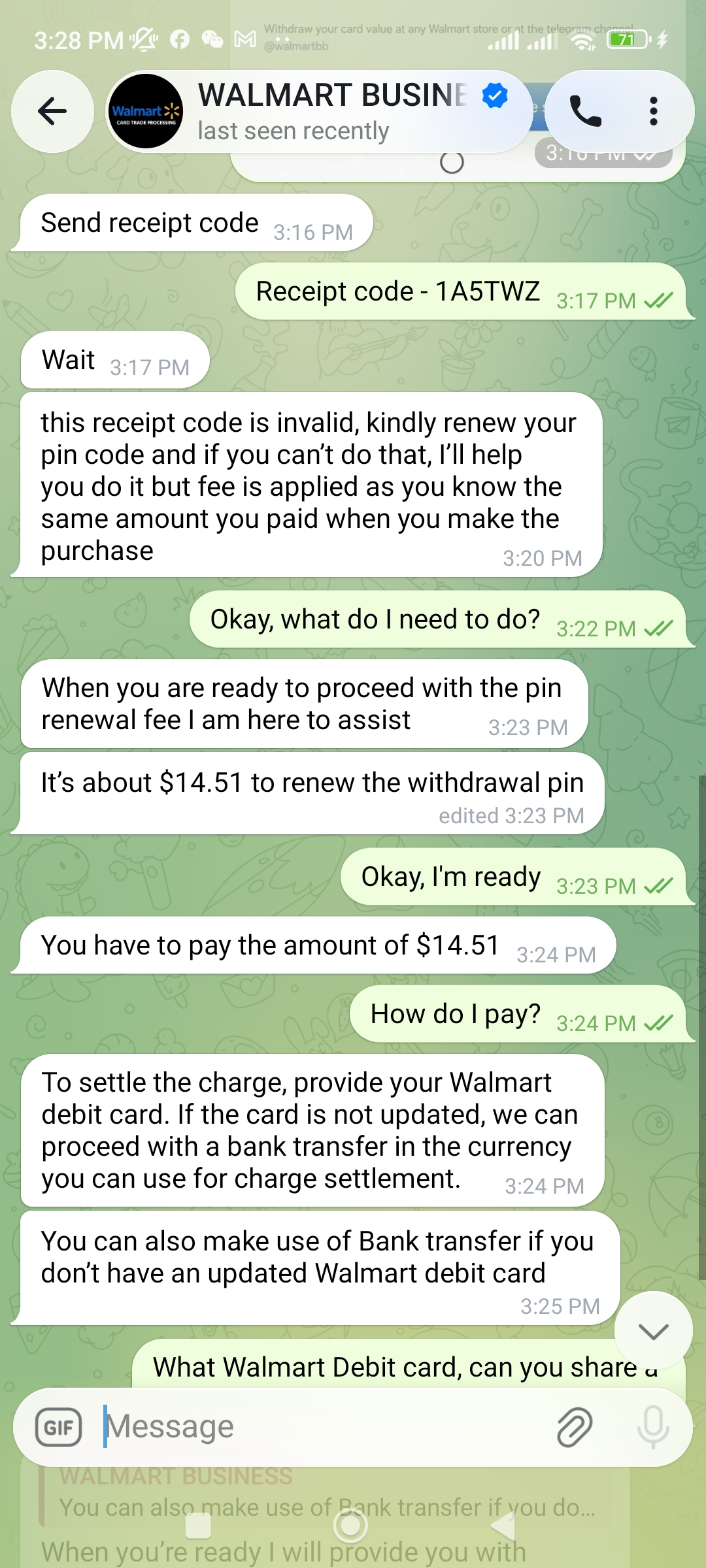
Phase 3: The pivot — “your code is invalid”
This is where the scam shifts from the fake card to real money extraction.
Channel: “Wait.” Then: “This receipt code is invalid. Kindly renew your pin code, and if you can’t do that, I’ll help you do it but fee is applied, as you know the same amount you paid when you make the purchase.”
The language is carefully constructed. “Renew your pin code” sounds like a technical maintenance step, not a payment. “The same amount you paid when you make the purchase” implies the fee is standard and expected. It is neither.
FlipEx: “Okay, what do I need to do?”
Channel: “When you are ready to proceed with the pin renewal fee, I am here to assist.”
Channel: “It’s about $14.51 to renew the withdrawal pin.”
$14.51 is a psychologically optimised amount. It is small enough to feel trivial relative to the “$1,000 value” of the card, but large enough to be worth collecting across hundreds of victims. If the scammer runs this script 50 times a day and even 10 victims pay, that is $145 per day from the fee alone.
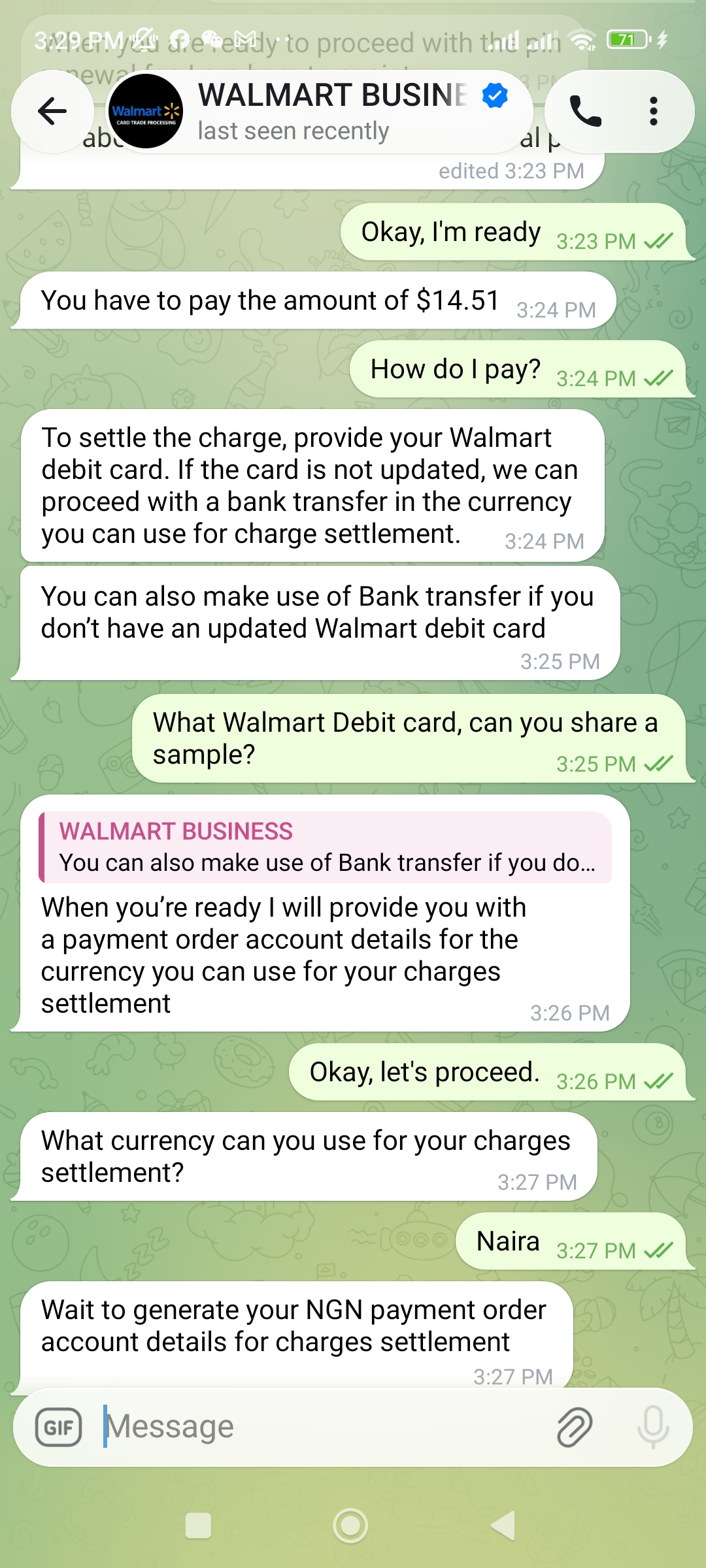
Phase 4: The payment collection
So, we agreed to pay.
Channel: “What currency can you use for your charges settlement?”
FlipEx: “Naira.”
Channel: “Wait to generate your NGN payment order account details for charges settlement.”
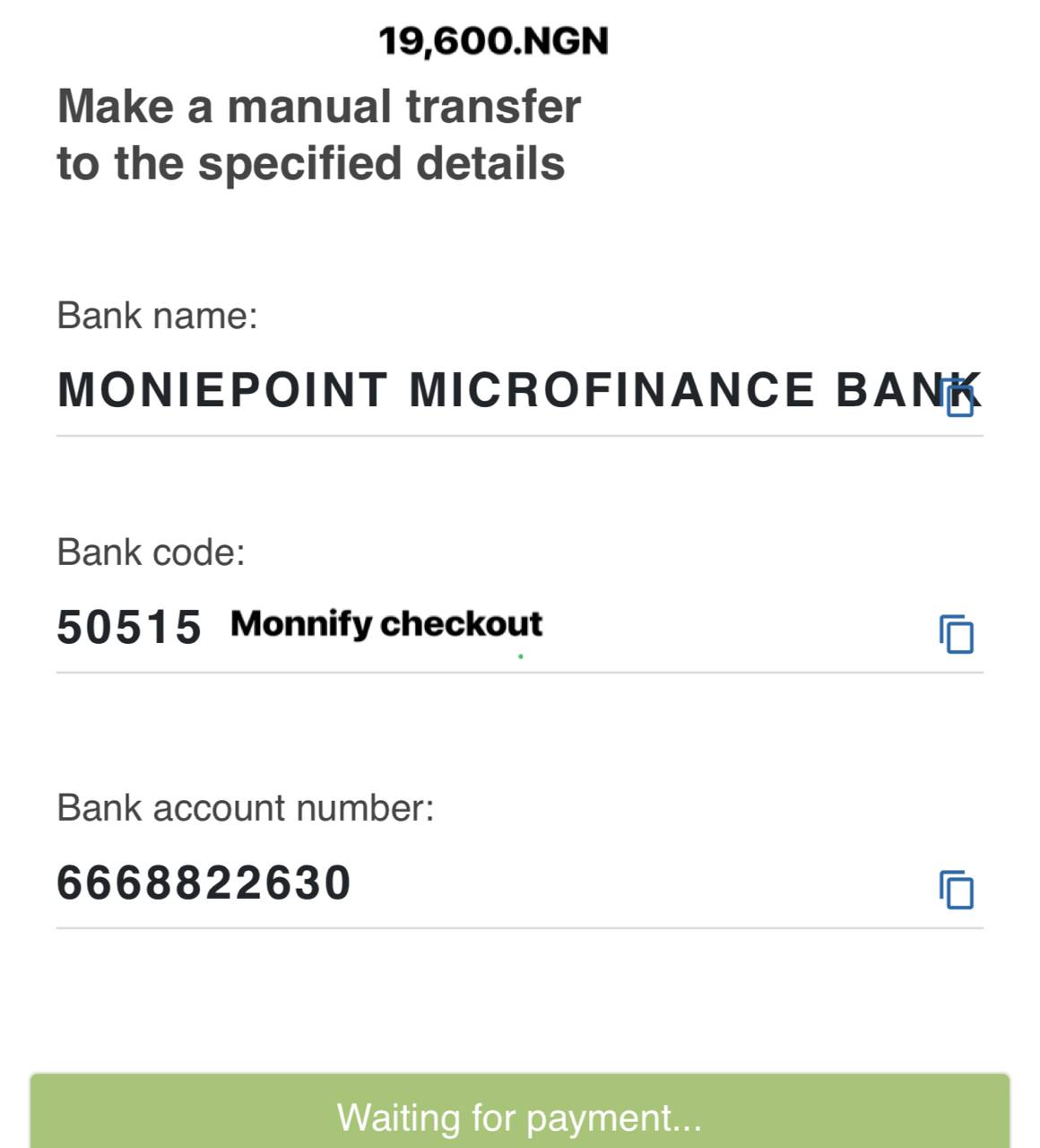
The channel then sends a Monnify checkout page - a real Nigerian payment gateway interface showing:
- Amount: 19,600 NGN
- Bank name: MONIEPOINT MICROFINANCE BANK
- Bank code: 50515 (labelled “Monnify checkout”)
- Bank account number: 6668822630
This is the critical reveal. The scammer is using a legitimate Nigerian payment infrastructure (Monnify, which is a regulated payment gateway) to collect the “fee.”
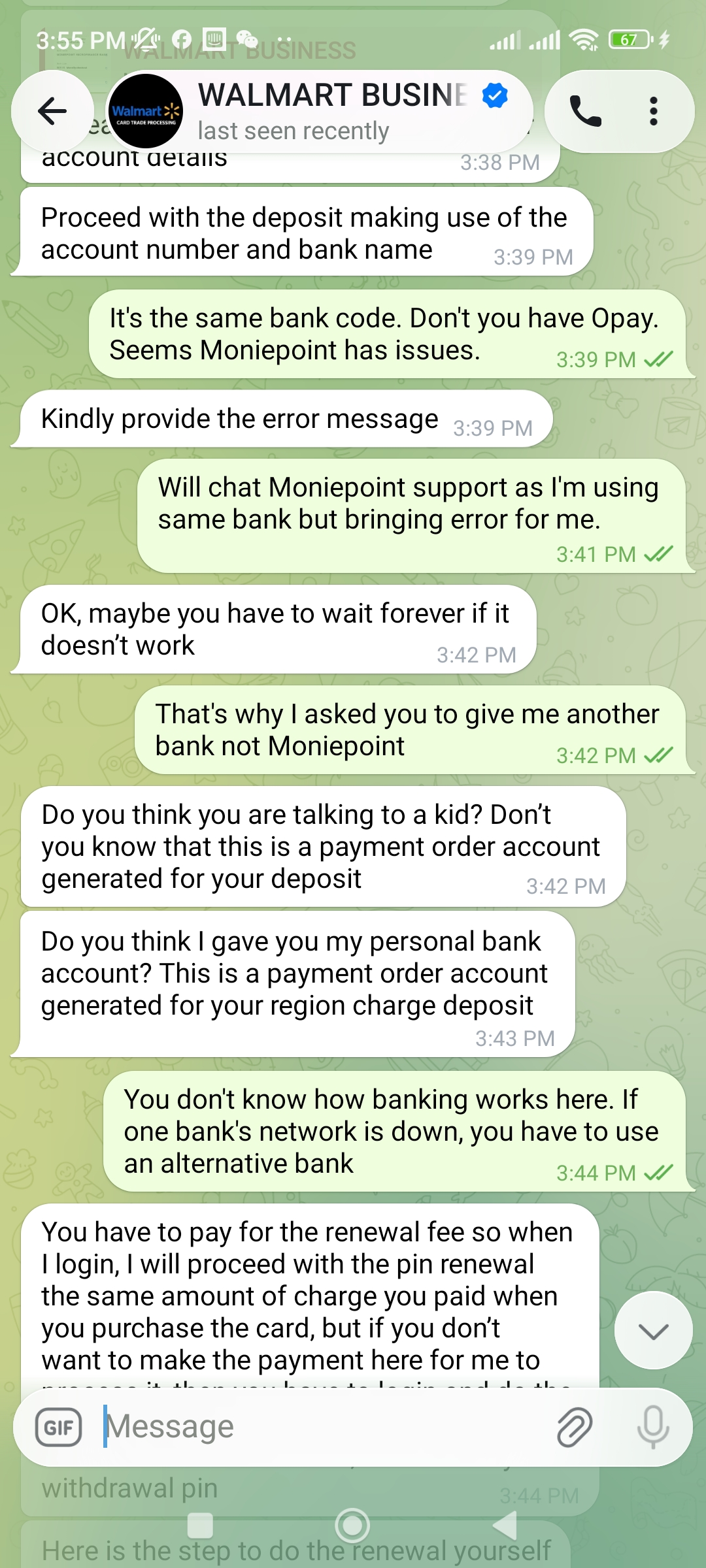
We tried to test them further by reporting that the bank code is not recognised and asks for an alternative bank, the scammer on the other end becomes aggressive:
Channel: “Don’t make use of Bank code. Only make use of the account number and bank name.”
When FlipEx persisted, the scammer generates a second Monnify checkout with a different account number: 6915011635, same bank (Moniepoint), same amount (₦19,600).
Phase 5: Pressure and hostility
When we pushed back on the bank transfer not working, the conversation turns hostile:
Channel:
“Do you think you are talking to a kid?”
“Do you think I gave you my personal bank account? This is a payment order account generated for your region charge deposit.”
“So maybe you would like to wait forever.”
“Just know that, regardless of how long you messaged or delay, the policy remain unchanged and you are getting no help out of this I’ve given.”
This pressure is designed to make us victim feel we are running out of time, that the “$1,000 value” on the card will disappear if we do not act now, and that arguing is futile. Classic urgency and authority tactics.
When we explained that Nigerian banking has its own challenges and asks for an alternative payment method, the scammer refuses:
Channel: “Make use of the provided bank.”
The conversation ends with the scammer offering to let us “do the renewal yourself” and becoming unavailable — a final pressure move designed to make us feel that we are losing access to the only path to their “$1,000.”
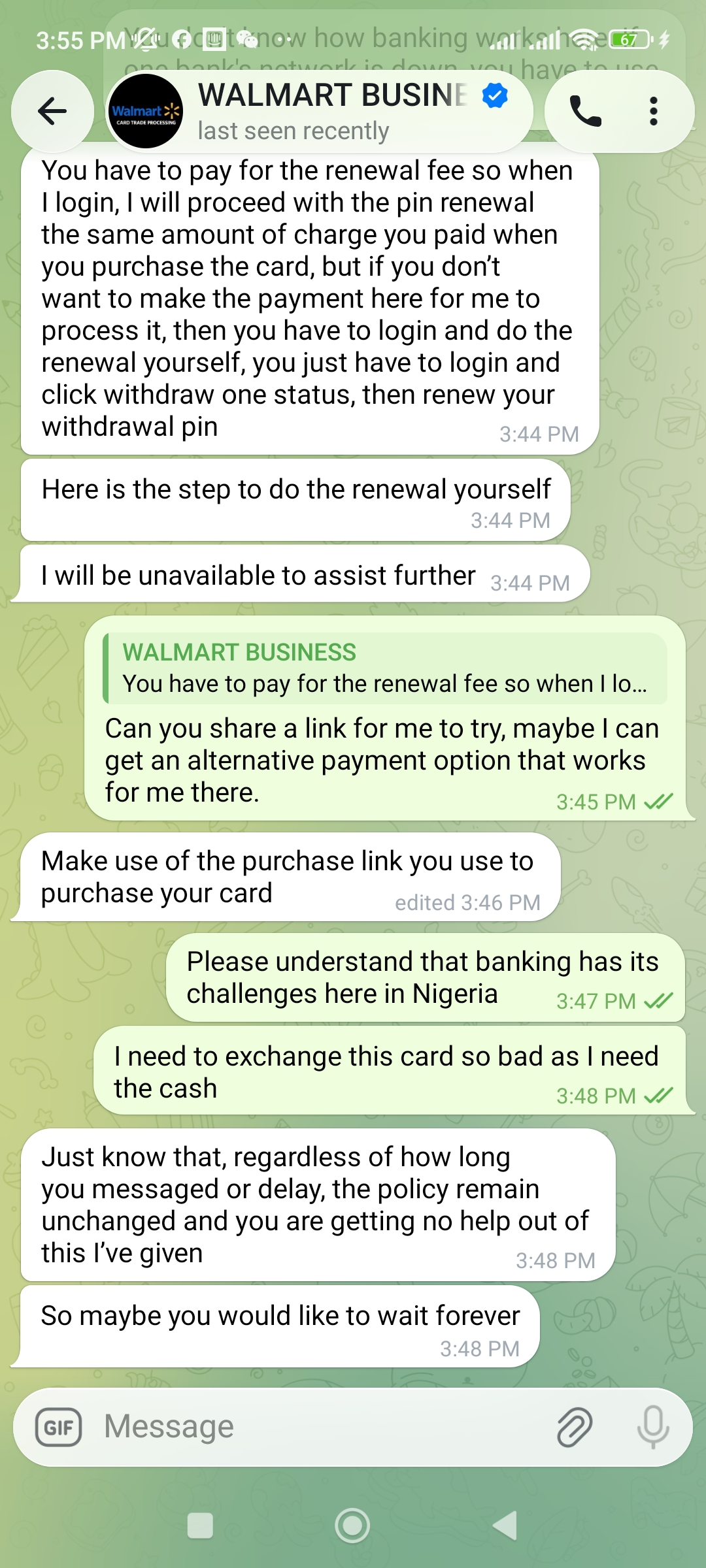
What actually happened here
Let us be precise about what this scam accomplished:
- The fake card was never the product - The “$1,000 Walmart card” was worthless from the start. It was bait to get the victim into the Telegram channel.
- The real extraction is the ₦19,600 “fee.” - The scammer does not need the card to have value. They need the victim to believe the card has value long enough to pay the fee.
- The Wise.com link is social engineering - It borrows the credibility of a legitimate financial tool to make a fraudulent rate quote look real.
- The Monnify checkout is infrastructure abuse - A regulated Nigerian payment gateway is being used to collect scam proceeds into mule Moniepoint accounts.
- The hostility is scripted - The aggressive language is not the scammer losing their temper. It is a deliberate tactic to make the victim feel that their window is closing and that compliance is the only path forward.
- The victim loses twice - First on the worthless card (time wasted). Then on the ₦19,600 fee (real money lost). If they had “more cards like this to exchange” (as the user mentioned in the chat), the scammer would repeat the fee extraction on each one.
How to protect yourself
If you are reading this because you are in the middle of a similar conversation:
- Stop immediately - Do not send any money. The card has no value. The “fee” will not unlock anything.
- Do not share banking details - If you have already shared account numbers, PINs, or passwords with the channel, change them now.
- Report the Telegram channel - Open the channel, tap the three-dot menu, select Report, choose Fake or Scam.
- If you already paid the fee - contact your bank immediately and report the transaction as fraud. The receiving account is likely a mule account. Your bank may be able to flag or reverse the transfer if reported quickly.
- Verify any Walmart card independently - Check the balance at walmart.com/giftcards/balance or call 1-888-537-5503. If the card is real, it will show a balance. If it does not exist in Walmart’s system, no Telegram channel can make it real.
For a quick visual guide to spotting fake Walmart cards before you even contact anyone, see how to spot a fake Walmart gift card.
If you have a real Walmart gift card (one that shows a valid balance on Walmart’s own system), FlipEx trades it for Naira in minutes. See how to sell Walmart gift cards for Naira on FlipEx.